

Hail Damage Roof Inspection in Little Rock, AR
A professional hail damage roof inspection in Little Rock identifies hidden fiberglass fractures, crushed mineral granules, and collateral metal indentations before water penetrates your home. Because hail impacts rarely cause immediate daylight leaks, our licensed inspectors conduct slope-by-slope 10x10 test square evaluations, providing homeowners and insurance adjusters with forensic photo evidence, written findings, and honest repair-versus-replace guidance.
What Hail Actually Does to Asphalt Shingle Roofs
Asphalt shingles rely on tightly packed mineral granules to shield the bituminous asphalt binder from ultraviolet sun radiation. When hail stones strike a roof at speeds exceeding 50 to 90 miles per hour, several catastrophic material failures take place:
Granule Displacement and Bruising
The impact violently dislodges the ceramic granules, exposing the raw black asphalt to direct UV degradation. Within months of sun exposure in Arkansas humid summers, the unprotected asphalt dries out, shrinks, and cracks.
Fractured Fiberglass Reinforcement Mat
Pressing a thumb into a fresh hail strike reveals a soft, spongy indentation where the fiberglass fibers have severed. Water capillary action pulls rainwater directly through these micro-punctures into the attic sheathing.
Thermal Bond Delamination
Hail impact shockwaves travel through the shingle layer, severing the self-sealing adhesive strips and leaving shingles vulnerable to subsequent moderate wind lift.
How Our Roofers Conduct a Test Square Inspection
Insurance companies require rigorous proof before approving a hail restoration claim. Rather than relying on casual glances from a ladder, our network roofers execute standard Haag-certified engineering inspection practices:
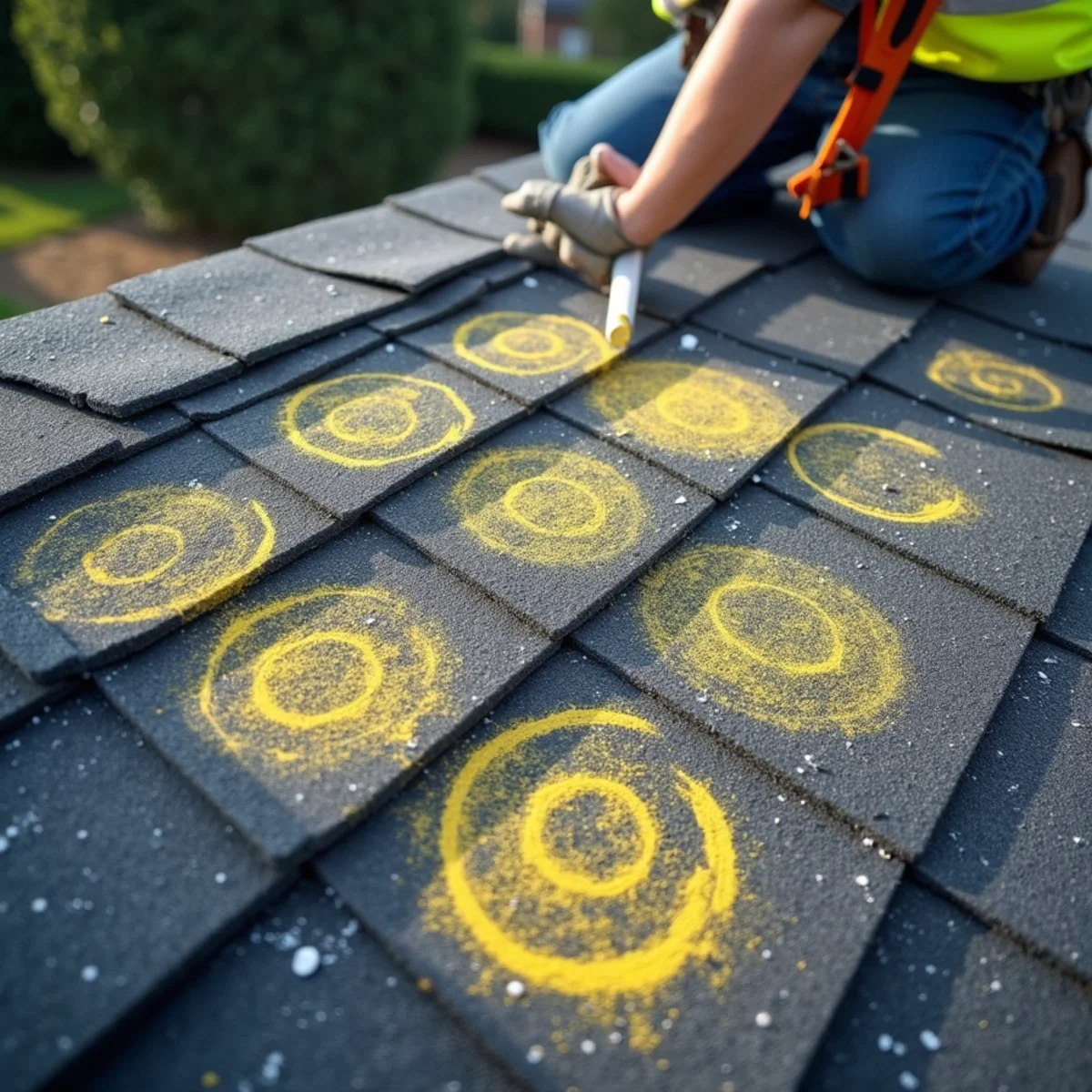
Marking 10x10 Test Squares
On each directional slope (North, South, East, West), we mark a 100-square-foot test square with chalk and circle every authentic hail strike with a verifiable fiberglass fracture.
Cataloging Collateral Soft Metal Damage
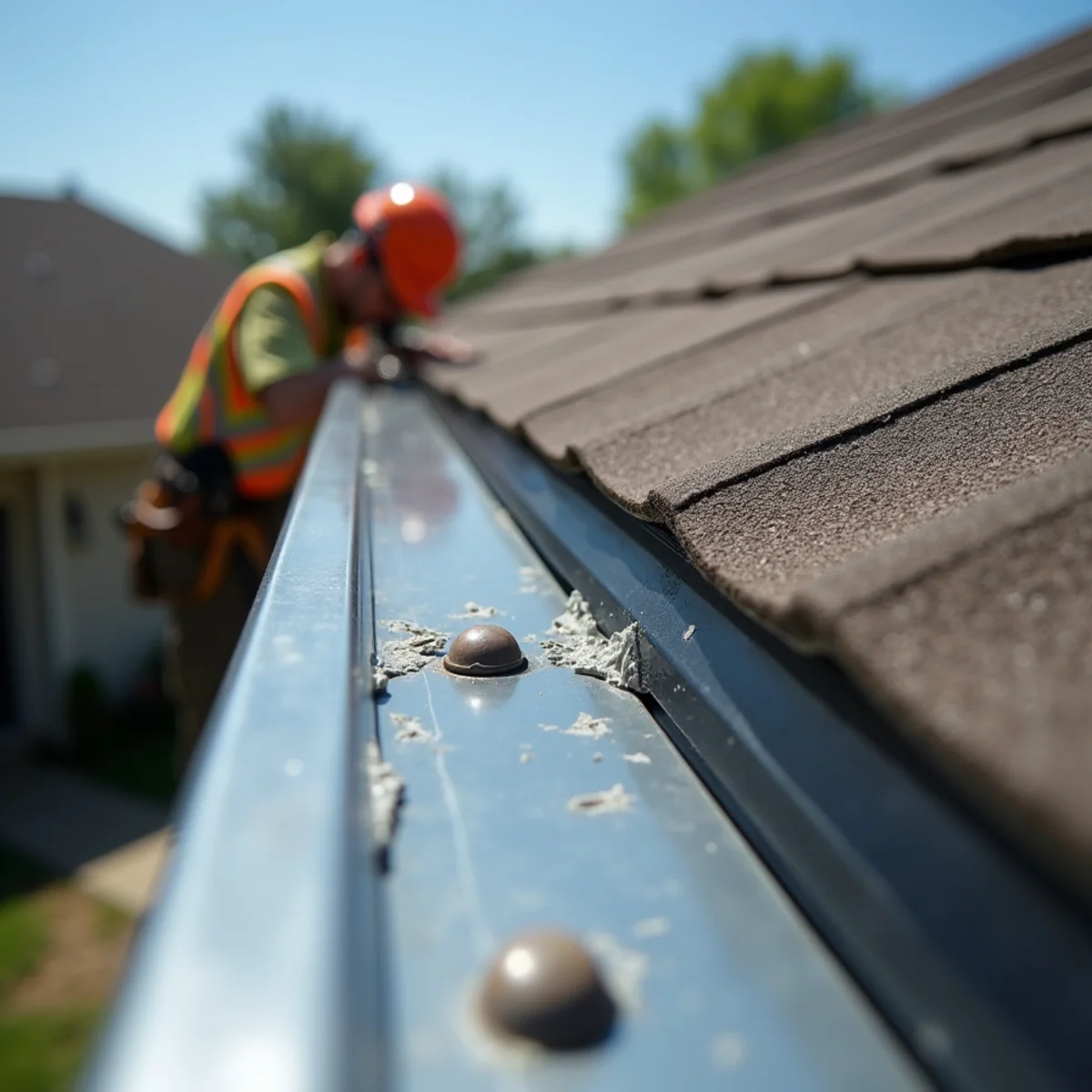
Soft metals are the clearest barometer of hail size and density. We photograph indentations and spatter marks on aluminum gutters, downspouts, roof turtle vents, air conditioning condenser fins, and lead pipe boot flashings.
Differentiating Hail Strikes from Blistering
Inexperienced adjusters frequently try to misclassify hail damage as manufacturing blisters or thermal cracking. We document the circular shape, granular depression, and fresh mat bruising that proves storm causality.
Need Hail Damage Roof Inspection in Little Rock?
Our licensed roofers answer 24 hours a day, 7 days a week. We provide a full photo survey and written scope before any work begins.
Forensic Distinctions: Hail Impact vs. Pre-Existing Blistering
In Central Arkansas, insurance adjusters frequently contest hail claims by labeling legitimate storm bruises as organic manufacturing blistering, granule loss from aging, or mechanical foot-traffic scuffs. Our forensic inspections document exact physical criteria to protect your rights:
Underlying Mat Rupture
Blistering occurs when volatile moisture pockets in the asphalt off-gas during intense summer heat, leaving hollow pits without broken fiberglass reinforcement. A true hail strike compresses the mat downward, fracturing structural fibers beneath the granule pocket.
Directional Spatter and Oxidation Removal
Hailstones blast clean the oxidized surface film of weathered shingles, copper chimney caps, and painted valley metal, leaving distinctive bright spatter marks aligned with the storm vector recorded by local Little Rock Doppler radar.
Neighboring Slope Consistency
We correlate strike patterns across windward versus leeward pitches, demonstrating to insurance adjusters that damage is isolated to directional exposures impacted by the specific squall line.
Why Prompt Inspection Protects Your Insurance Rights
Most homeowners insurance policies in Arkansas include strict storm claim filing windows—typically 12 months from the date of loss. If you delay your inspection until next spring when a leak finally shows up on your living room ceiling, insurance carriers may deny the claim, arguing that the leak resulted from wear and tear or neglect rather than the specific hailstorm.
Symptoms of Hail Damage Roof Inspection
Our Step-by-Step Restoration Process
Ground-Level Collateral Check
We inspect outdoor condenser units, gutters, window wraps, and garage doors for impact verification.
Roof-Plane Walk & Test Squares
Our inspector climbs every accessible pitch, marking 10x10 test squares and identifying bruised shingle fibers.
Attic & Decking Check
We inspect the underside of your roof sheathing for moisture discoloration, rotted OSB, and fastener penetration.
Written Scope & Photo Delivery
You receive a complete PDF portfolio with dated high-definition photos ready to hand to your insurance adjuster.
What Affects the Cost of Hail Damage Roof Inspection?
We never publish deceptive flat-rate prices because every roof in Central Arkansas presents distinct structural variables. During your on-site assessment, your contractor itemizes costs based on:
- Visual ground inspections vs. comprehensive harness-assisted steep roof walks
- Roof geometry complexity (multiple gables, hips, and dormers take longer to assess)
- Attic crawl space access and interior thermal imaging requirements
- Assistance provided during insurance adjuster on-site meetings
Arkansas Law Note: In compliance with state regulations, roofers cannot waive or rebate homeowners insurance deductibles.
Why Little Rock Homeowners Choose Us for Hail Damage Roof Inspection
Navigating storm damage restoration or major roof investments requires dependable, locally accountable roofing contractors. We eliminate common homeowner headaches through verified legal licensing, active state bonding, and rigorous forensic inspection standards.
Every contracted crew holds active registration with the Arkansas Contractors Licensing Board and maintains a verified $15,000 Arkansas surety bond for homeowner protection.
Thousands of documented forensic inspections and restorations across Pulaski and Saline counties—from historic Hillcrest cottages to sprawling Chenal Valley custom estates.
Little Rock property owners consistently rate our dispatched crews 5 stars for punctual arrival, transparent written estimates, clean job sites, and zero high-pressure sales tactics.
Live dispatchers answer 24 hours a day, 7 days a week. For storm breaches and active leaks, crews mobilize rapidly for emergency tarping and stabilization within Central Arkansas.
Where We Provide Hail Damage Roof Inspection
Our service radius spans the entire Little Rock metropolitan area within a prompt 35-minute dispatch radius. Whether your property is located in downtown Little Rock, West Little Rock, Hillcrest, The Heights, or neighboring Pulaski and Saline county communities, our roofing teams bring dedicated emergency response trucks and materials directly to your driveway.
Related Articles on Hail Damage Roof Inspection
What to Do After a Hail Storm in Little Rock: The First 48 Hours
The critical actions every Central Arkansas homeowner must take immediately following a severe hail squall to protect their home, prevent structural rot, and secure their insurance claim.
What Does Hail Damage Look Like on Asphalt Shingles?
A comprehensive visual and tactile guide to recognizing authentic hail damage on architectural and 3-tab shingles in Central Arkansas, distinguishing storm bruises from blistering.
What Size Hail Damages a Roof? Pea to Baseball, Explained
From marble-sized hail to massive baseball stones: understanding kinetic energy, fall velocity, and shingle damage thresholds.
Frequently Asked Questions: Hail Damage Roof Inspection
Clear, honest answers regarding storm damage, hail inspections, and insurance claims in Arkansas.
Hail damage rarely causes immediate leaks. The impact bruises the shingle, breaks the fiberglass mat, and knocks away granules. As the sun beats down on the bare asphalt over the next 6 to 18 months, the material rots, cracks, and eventually allows water inside. By the time you notice a ceiling stain, your insurance filing window may have expired.
Ready to Schedule Your Inspection?
Call (773) 207-0769 now to connect with our on-call Little Rock roofing dispatch team.
Not urgent? Send a request
For the fastest help, call (773) 207-0769. Or submit your project details below to schedule an inspection.
Emergency Storm Response
Water coming in or active tree impact? Our on-call Little Rock crews are ready for temporary dry-in tarping and urgent repairs.
Call (773) 207-0769