
What Size Hail Damages a Roof? Pea to Baseball, Explained
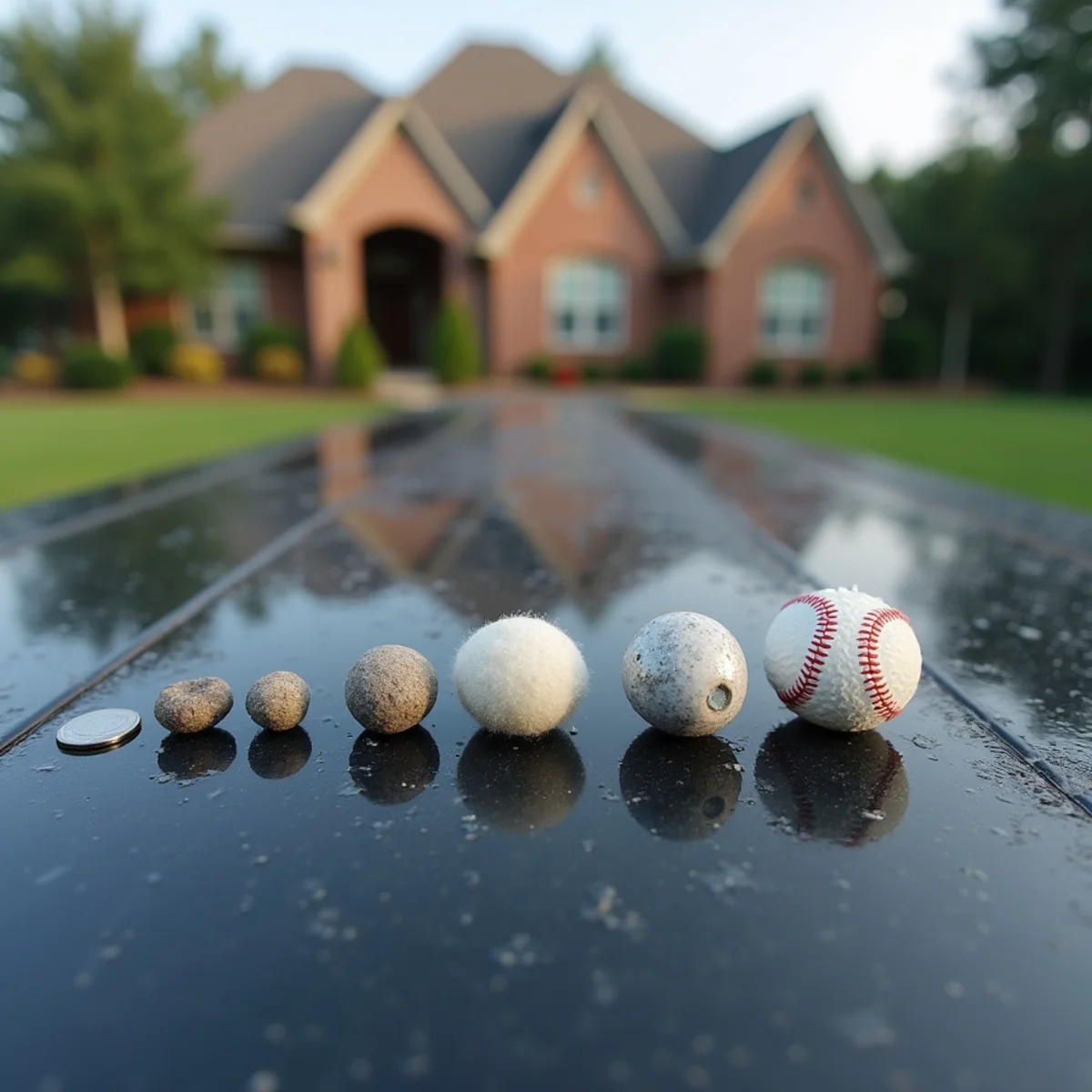
Hail measuring 1 inch (quarter-sized) or larger reliably causes functional roof damage to standard asphalt shingles, while weathered, brittle 3-tab shingles can suffer granule loss and micro-fractures from hail as small as 0.75 inches (penny-sized). Once stones reach 1.75 inches (golf ball size) or larger, severe fiberglass mat ruptures and soft metal punctures occur regardless of shingle age.
Hail Size & Damage Severity Matrix
To determine what size hail damages a roof, roofing forensic engineers analyze stone diameter, terminal fall velocity, and impact kinetic energy. The table below outlines the structural risk profile across typical Central Arkansas thunderstorm conditions:
| Hail Category | Physical Diameter | Terminal Velocity | Kinetic Energy | Observed Roof & Shingle Impact |
|---|---|---|---|---|
| Pea to Marble | 0.25" to 0.50" | 20 – 30 mph | < 0.5 Joules | Harmless to sound shingles; light vegetation stripping; no insurance claim validity. |
| Penny to Nickel | 0.75" to 0.88" | 35 – 42 mph | 1.2 – 2.4 Joules | Dislodges loose granules on aging roofs (>12 yrs); dents oxidized gutters; rarely penetrates fresh architectural matting. |
| Quarter (Insurance Threshold) | 1.00" | 45 – 52 mph | 3.5 – 5.0 Joules | Standard insurance benchmark. Fractures underlying fiberglass matting on 3-tab; bruises standard architectural shingles; dents furnace caps and downspouts. |
| Half Dollar to Walnut | 1.25" to 1.50" | 55 – 62 mph | 8.0 – 14.0 Joules | Deep circular bruising on heavy architectural shingles; cracks plastic ridge vents; dents AC coil fins and chimney flashing. |
| Golf Ball | 1.75" | 64 – 72 mph | 22.0 – 28.0 Joules | Severe structural rupture. Breaches fiberglass scrim; cracks ridge caps along bend; shatters skylights; warrants full slope or roof replacement. |
| Tennis Ball | 2.50" | 78 – 88 mph | 55.0 – 70.0 Joules | Smashes decking between rafters; shatters clay/concrete tile; crushes metal box vents flat; creates immediate interior leaks. |
| Baseball to Softball | 2.75" to 4.00"+ | 90 – 105+ mph | 100.0 – 250.0+ Joules | Catastrophic envelope failure. Punches directly through 1/2" OSB and plywood decking into living spaces; emergency tarping mandatory. |
Why Wind Speed Multiplies Kinetic Impact Energy
In standard meteorological models, hail stones fall at terminal velocity governed solely by gravity and atmospheric air resistance. However, severe convective supercells in Central Arkansas rarely drop hail in calm air. Downburst winds and rear-flank downdrafts ranging from 40 to 80 mph drastically alter the physics of impact.
1. Vector Trajectory and Impact Angle
When wind propels hail horizontally, the angle of impact shifts from a perpendicular 90-degree blow to an acute 30- to 45-degree angle. On windward roof slopes, the surface of the roof often sits directly perpendicular to the trajectory vector. Instead of glancing off, the hail stone delivers 100% of its kinetic energy into the shingle tab.
2. The Velocity-Squared Multiplier
Kinetic energy equals mass times velocity squared divided by two (KE = ½mv²). Because velocity is squared in the equation, even a modest increase in strike speed yields exponential destruction. A 1-inch hail stone falling in zero wind at 48 mph carries roughly 4 Joules of kinetic energy. The same stone propelled by a 60 mph storm downdraft strikes at an effective speed of 77 mph, delivering over 10 Joules—more than double the destructive energy, easily rupturing architectural shingles that would otherwise survive.
Critical Factors That Determine Roof Vulnerability
Hail size alone does not dictate whether your roof will leak. Forensic roof investigators evaluate four core site variables when inspecting a Little Rock property after a thunderstorm:
- Shingle Age and Embrittlement: Asphalt shingles rely on volatile petroleum oils to remain flexible. Under Arkansas summer sun, UV radiation evaporates these plasticizers over 8 to 12 years. Older, brittle shingles lack elasticity and crack under modest 0.75-inch stones, whereas a brand new shingle might flex and absorb the impact.
- Roof Pitch and Exposure Slope: High-pitch roofs (such as 8/12 or 10/12 slopes) deflect vertical hail stones with glancing impacts, dissipating force. Conversely, low-pitch slopes (3/12 to 5/12) take the brunt of vertical strikes directly onto the shingle surface.
- Decking Solidity and Underlayment: Shingles installed over solid 5/8-inch plywood decking exhibit far higher impact resistance than shingles installed over thin, sagging 3/8-inch particleboard or warped 1x6 spaced board sheathing. When the backing yields, the shingle flexes downward and snaps the fiberglass core.
- Ambient Temperature During the Storm: Hail storms accompanying cold spring fronts cause shingles to chill rapidly. Cold asphalt is rigid and brittle, increasing fracture rates compared to warm summer storms where pliable asphalt absorbs stone momentum.
Expert E-E-A-T Insight: The Haag Steel Ball Impact Standard vs. Real Hail
In roofing science, impact resistance is classified under UL 2218, which fires steel balls of varying diameters onto shingle specimens to simulate hail. A Class 4 rating requires the shingle to withstand the impact of a 2.0-inch steel ball dropped from 20 feet without showing cracking, tears, or fractures on the underside of the mat.
However, field adjusters frequently argue that "hail is softer than steel." While ice has lower surface hardness than forged steel, hailstones are not smooth spheres—they form irregular, knobby ice clusters with jagged spires. These ice ridges act as microscopic chisel points that focus dozens of Joules of kinetic force onto a single pinpoint, piercing fiberglass mats at lower thresholds than laboratory steel balls. Our certified inspectors conduct tactile underside uplift tests during a professional hail damage roof inspection to document genuine fractures before adjusters write their scopes. For long-term protection, we guide homeowners on upgrading to engineered impact-resistant shingles and executing complete roof replacement in Benton, Maumelle, and across Central Arkansas.
Related Services & Central Arkansas Coverage
Frequently Asked Questions on This Topic
Clear, honest answers regarding storm damage, hail inspections, and insurance claims in Arkansas.
Yes. While 1-inch (quarter-sized) hail is often considered the baseline threshold, wind-driven quarter hail or hail striking shingles older than 8 to 10 years consistently fractures the internal fiberglass reinforcement mat, creating leaks that manifest months later.
Need Expert Advice on Your Roof?
Speak with a licensed Central Arkansas roofing professional right now at (773) 207-0769.
Have a Storm Question? Request an Inspection
Submit your details below and an on-call Little Rock roofer will follow up promptly.