
What Does Hail Damage Look Like on Asphalt Shingles?

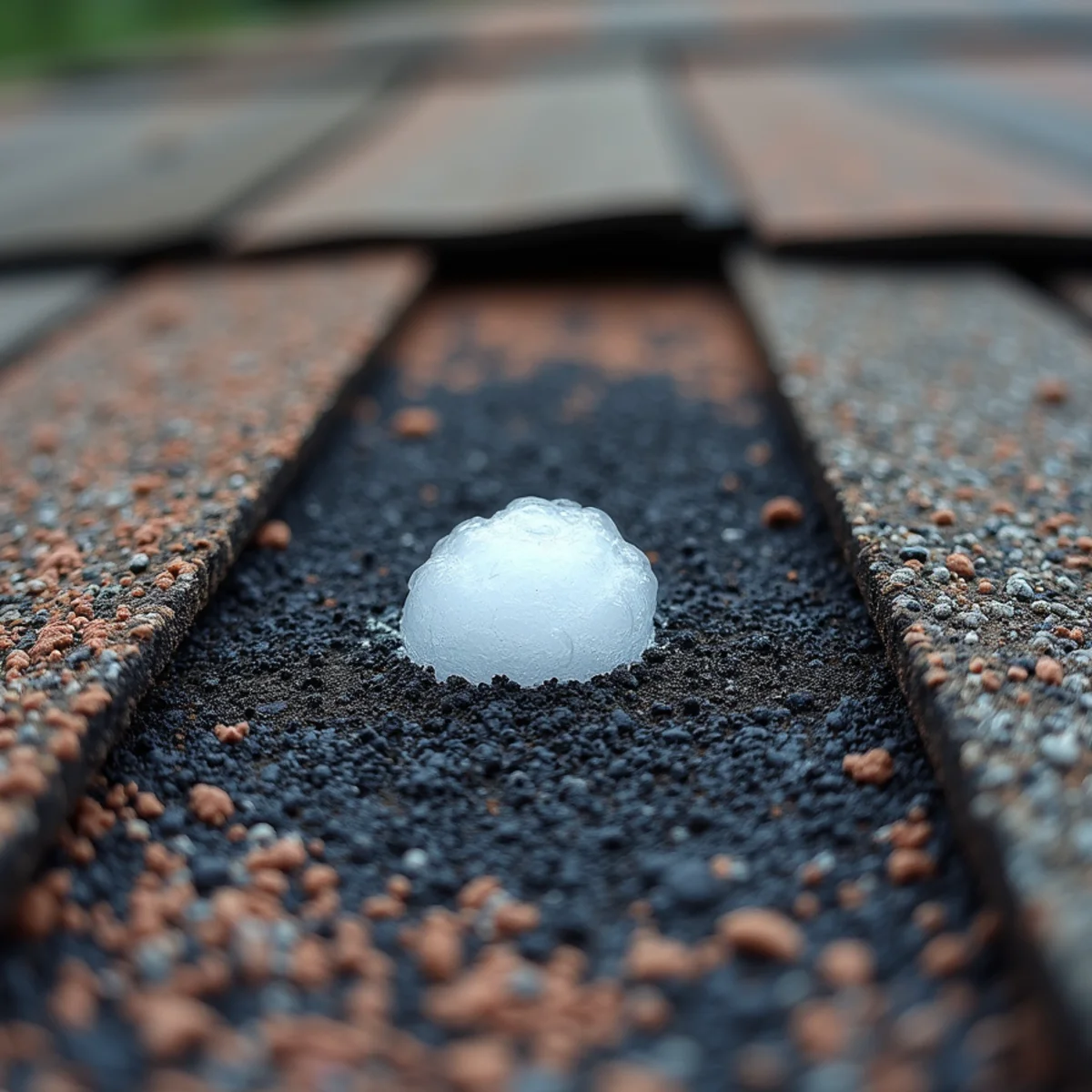
What does hail damage look like on asphalt shingles? Genuine hail damage appears as localized, circular or oval bruised indentations where high-velocity ice has dislodged protective ceramic granules, exposing the black underlying asphalt substrate. When pressed gently with a thumb, a fresh hail strike feels spongy and soft, indicating that the internal structural fiberglass reinforcement mat has fractured beneath.
The 4 Physical Hallmarks of Authentic Hail Impact
Because hailstones strike roofs at velocities between 50 and 90 miles per hour, they produce distinct physical reactions in petroleum-based asphalt shingles. Recognizing these physical criteria allows homeowners to spot storm damage before moisture rots roof decking:
-
Circumscribed Granule Displacement: Hailstones blast away the mineral granules that provide UV protection. This leaves dark, circular spots where the raw bituminous asphalt core is directly exposed to sunlight. Within months, Arkansas summer heat bakes this exposed asphalt, creating micro-cracks.
-
Spongy, Fractured Reinforcement Matting: Unlike hail hitting metal, shingles flex downward on impact. When pressed with a thumb, a hail strike yields with a distinctive spongy softness. This tactile sensation proves that the woven fiberglass matting inside has ruptured, allowing water capillary wicking.

-
Directional Impact Dispersion: Hail squalls track across Central Arkansas along distinct meteorological vectors (most commonly southwest to northeast). Consequently, directional slopes facing the storm wind display significantly denser strike clusters than sheltered leeward pitches.
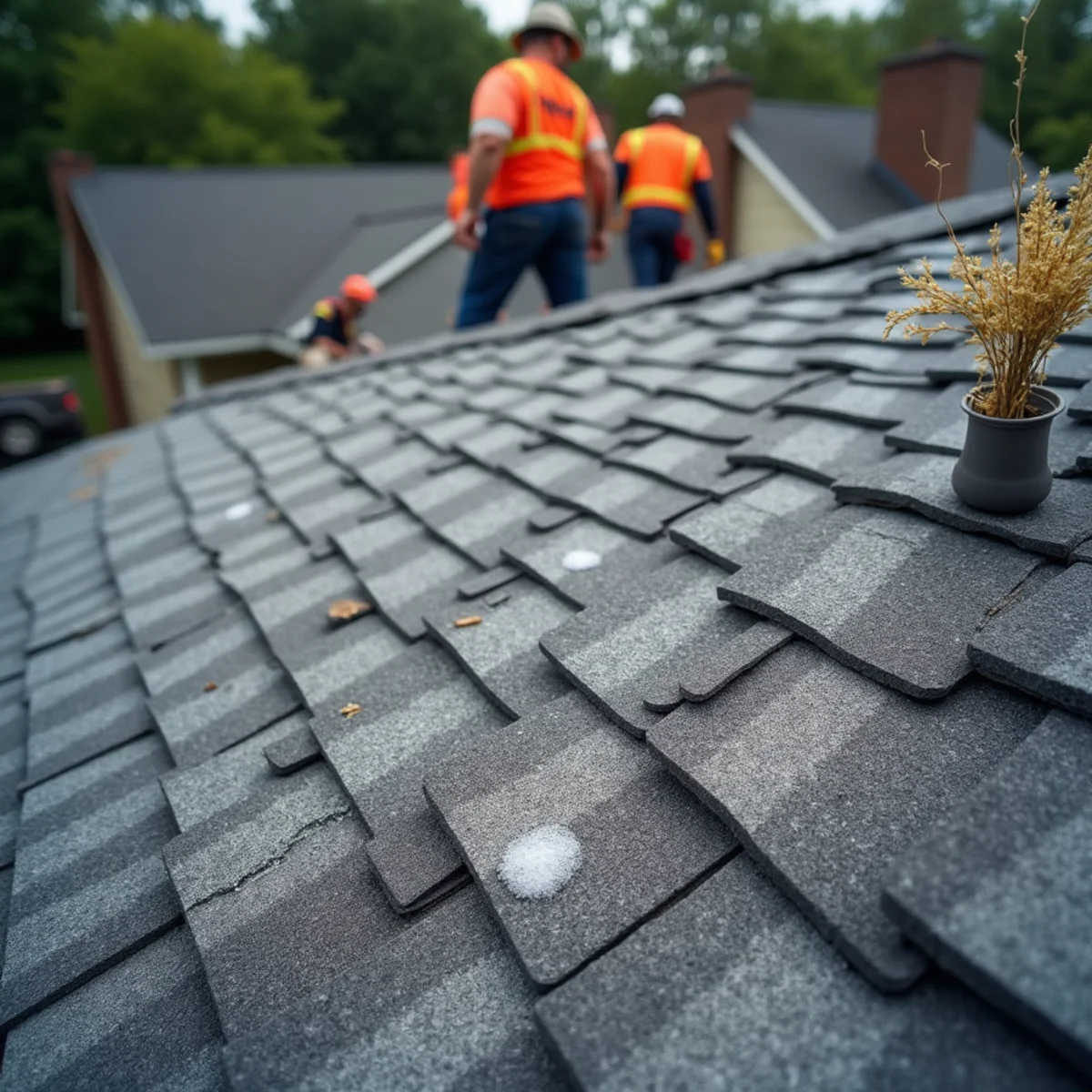
- Thermal Seal Strip Delamination: Kinetic shockwaves from heavy hail impacts vibrate through the shingle course, breaking the factory thermal sealant line. Once broken, the tabs lift freely in subsequent 40 mph winds, accelerating wind-tear failure.
Forensic Comparison Table: Hail vs. Blistering vs. Mechanical Wear
Insurance adjusters frequently challenge hail claims by attributing damaged areas to non-covered conditions such as manufacturing blistering, organic shingle aging, or foot-traffic scuffs. Here is the forensic differentiation matrix used by Haag-certified inspectors:
| Diagnostic Factor | Authentic Hail Strike Damage | Thermal / Manufacturing Blistering | Foot Traffic / Mechanical Scuffing |
|---|---|---|---|
| Surface Profile | Depressed, indented dimple; soft to thumb touch | Raised bubble or popped circular crater with sharp asphalt rim | Flat, linear abrasion or drag mark; surface scrape only |
| Fiberglass Reinforcement | Fractured and ruptured through mat fibers | Intact and sealed; no underlying structural puncture | Intact; only topical granules knocked off top coating |
| Distribution Pattern | Dense on windward slopes; correlated with Doppler track | Uniform across hot sunny slopes regardless of storm direction | Isolated to ladder access points, valleys, or around HVAC units |
| Collateral Evidence | Dented metal gutters, box vents, AC condenser fins | Zero denting or deformation on surrounding soft metals | Zero denting on surrounding soft metals |
Why "Minor" Hail Damage Leads to Delayed Structural Failure
Homeowners often assume that if a hailstorm does not cause immediate ceiling water stains, their roof survived unscathed. This is a hazardous misconception. When hail impacts break the fiberglass mat, the waterproofing barrier is permanently breached.
During summer in Central Arkansas, intense UV rays bake the exposed bituminous oils, causing the bruised spot to dry out and shrink. When winter arrives, moisture trapped inside these micro-crevices freezes and expands, widening the breach until rainwater channels into the attic framing. By the time water stains appear on your living room ceiling 12 months later, the 1-year insurance filing window has often closed, leaving the homeowner responsible for a multi-thousand-dollar out-of-pocket restoration.
Expert E-E-A-T Insight: The Haag 10x10 Test Square Protocol
When insurance adjusters walk your roof, they do not inspect every individual shingle. They utilize the industry-standard Haag Engineering evaluation method. On each directional roof slope (North, South, East, West), the inspector measures out a 10-foot by 10-foot square (100 square feet). Using carpenter’s chalk, every verified hail strike with a fractured mat is counted.
If an exposure exhibits 8 to 10 confirmed hail hits per test square, alongside verified collateral damage on soft metals (such as furnace caps or gutters), the entire slope or whole roof is classified as functionally totaled. Having our certified inspectors perform a preliminary hail damage roof inspection ensures your test squares are properly chalked and photographed before the adjuster arrives. If extensive damage mandates full replacement, explore our engineered roof replacement services across Maumelle, Cabot, and Pulaski County.
Related Services & Central Arkansas Coverage
Frequently Asked Questions on This Topic
Clear, honest answers regarding storm damage, hail inspections, and insurance claims in Arkansas.
Binoculars can reveal missing shingle tabs or large missing granule patches, but subtle mat fractures and indented bruises cannot be reliably identified from the ground. A hands-on, tactile inspection on the roof surface is required.
Need Expert Advice on Your Roof?
Speak with a licensed Central Arkansas roofing professional right now at (773) 207-0769.
Have a Storm Question? Request an Inspection
Submit your details below and an on-call Little Rock roofer will follow up promptly.