Emergency Roof Tarping After a Storm: How to Stop Water and Protect Your Claim
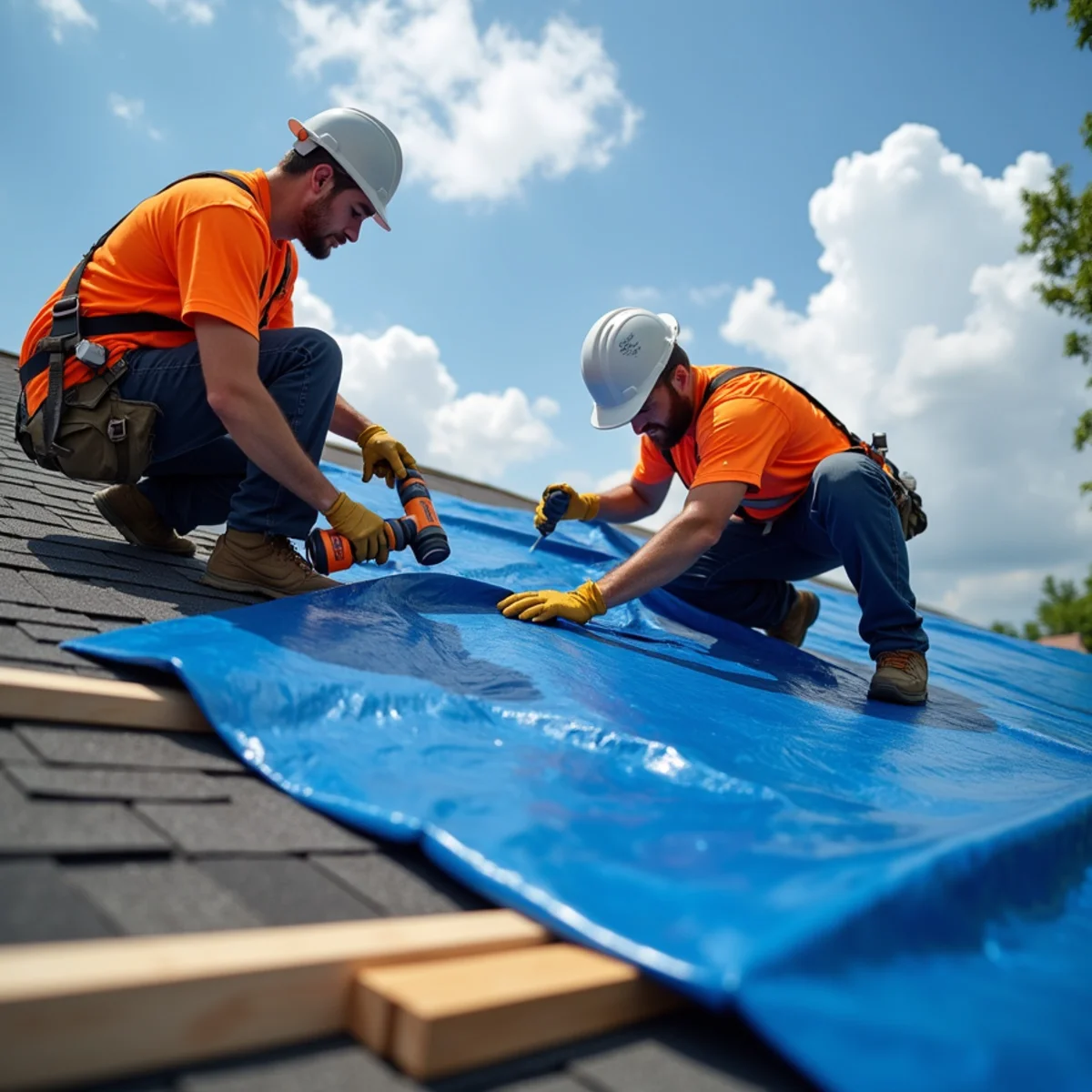
Executing emergency roof tarping after a storm in Arkansas is both a physical necessity and a mandatory legal duty: your homeowners policy requires prompt mitigation of secondary water intrusion, and standard insurance contracts reimburse 100% of reasonable professional tarping expenses under Coverage A without requiring your deductible upfront.
When high-wind downbursts rip off shingles or a fallen oak branch punctures your roof decking during an Arkansas thunderstorm, water immediately penetrates the attic framing. Within hours, dripping rainwater saturates blown-in fiberglass insulation, soaks ceiling sheetrock until ceilings collapse, and triggers toxic mold colonization within wall cavities. Understanding proper emergency tarping procedures keeps your family safe and safeguards your insurance claim.
Mechanical Batten Tarping vs. DIY Tarping Failure Matrix
There is a vast engineering difference between a temporary hardware-store tarp thrown over a roof and an engineered mechanical tarp installation designed to survive 60 mph follow-up storm fronts:
| Installation Element | Engineered Mechanical Tarping (Professional) | Improvised DIY Tarping (Amateur) | Field Performance & Failure Risk |
|---|---|---|---|
| Membrane Material | Commercial 10–12 mil heavy-duty woven polyethylene with UV inhibitors | Standard 4–6 mil lightweight blue poly tarp | Heavy mil resists shredding from sharp wood splinters; thin tarps rip within 48 hours. |
| Perimeter Anchoring | 2x4 or 1x2 spruce wood battens wrapped into tarp hem and screwed to rafters | Cinder blocks, loose bricks, car tires, or perimeter sandbags | Weighted objects blow off in 30 mph gusts, crashing through gutters and damaging siding. |
| Ridge Line Waterproofing | Tarp wrapped over the roof ridge cap by at least 3 to 4 feet onto the opposite slope | Tarp terminated below the peak or nailed flush to existing shingles | Over-the-ridge wrap prevents gravity water from running underneath the top hem. |
| Wind Uplift Rating | Engineered to withstand 60 to 70 mph thunderstorm wind gusts | Fails at 20 to 25 mph wind speeds | Professional batten sandwich creates continuous clamping force that eliminates flapping. |
| Insurer Reimbursement | 100% reimbursable under "Reasonable Repairs" with itemized contractor invoice | Out-of-pocket receipts often disputed or rejected for poor execution | Insurers readily approve certified professional mitigation to halt catastrophic interior payouts. |
Your Legal "Duty to Mitigate" Under Arkansas Insurance Policies
Every standard homeowners insurance policy issued in the State of Arkansas contains a binding legal clause titled Duties After Loss. This clause explicitly requires the insured homeowner to take immediate, reasonable steps to protect the covered property from secondary damage.
Consider this real-world scenario: An initial storm punctures a 2-foot hole through your roof decking. If you do not install a secure emergency tarp, and a subsequent rain storm three days later dumps 3 inches of water through the hole—ruining $15,000 in custom oak hardwood flooring, soaking antique furniture, and causing black mold throughout the drywall—the insurance carrier's claims adjuster has the legal authority to deny coverage for all interior damages, asserting you breached your duty to mitigate.
The 4-Step Professional Mechanical Tarping Procedure
When our emergency response teams arrive at a storm-damaged Central Arkansas residence, we execute a standardized 4-step weatherproofing protocol:
- Debris Clearance & Deck Stabilization: Fallen tree limbs, shattered branches, and loose shingles are cleared from the damaged field. If decking is broken, we install temporary 1/2-inch CDX plywood sheathing across rafters to restore substrate rigidity.
- Tarp Sizing & Ridge Transition: We deploy an industrial-grade, UV-treated 10-mil tarp sized to extend a minimum of 4 feet past the damaged perimeter on all sides. Crucially, the upper edge is draped over the ridge cap onto the opposite slope to prevent water sheeting down the roof from infiltrating behind the tarp.
- Wood Batten Sandwiching: Rather than driving nails directly through tarp eyelets (which rip out instantly in wind), we roll the edges of the tarp around 1x2 or 2x4 lumber strips. This "batten roll" distributes mechanical tension evenly along the entire edge.
- Structural Fastening with Exterior Screws: Using 3-inch exterior structural screws equipped with neoprene washers, we fasten the battens through the shingle layer directly into the underlying roof framing and rafters, creating a watertight clamp.
Critical Post-Storm Safety Warnings for Homeowners
While taking quick action is vital, attempting a DIY roof repair immediately after a storm poses severe life-safety hazards. Central Arkansas soils—especially dense red clay in Saline and Lonoke counties—become saturated mud after heavy thunderstorms, causing extension ladder bases to slip. Wet asphalt shingles covered with moss or dislodged granules have zero traction. Furthermore, fallen tree branches frequently pull down overhead electric service lines, energizing wet metal gutters. Never step onto a damaged roof—allow certified, safety-harnessed professionals to handle emergency stabilization.
Expert E-E-A-T Insight: How to Document Tarping for 100% Insurance Reimbursement
Insurance companies are legally required to reimburse emergency mitigation costs under the "Reasonable Repairs" provision of Coverage A. These funds are paid in addition to or as part of your dwelling coverage, and many carriers do not apply your deductible to initial emergency mitigation invoices.
However, to guarantee prompt reimbursement, documentation must be pristine. Our dispatch teams capture wide-angle and close-up date-stamped digital photographs of the roof breach BEFORE tarping, during framing stabilization, and AFTER mechanical batten fastening. We provide an itemized invoice detailing labor hours, equipment, square footage of membrane deployed, and lumber materials. When you submit our mitigation packet alongside your initial First Notice of Loss (FNOL), adjusters approve the expense without friction.
For immediate 24/7 storm response, call our emergency dispatch team. We provide rapid emergency tarping, complete storm damage roof repair, turn-key roof insurance claim filing, and permanent roof replacement for homeowners across Jacksonville, Benton, and throughout Central Arkansas.
Related Services & Central Arkansas Coverage
Frequently Asked Questions on This Topic
Clear, honest answers regarding storm damage, hail inspections, and insurance claims in Arkansas.
High-quality UV-rated 10-mil commercial tarps mechanically fastened with wood battens can protect a home for 60 to 90 days while insurance adjustments, engineering reports, and material deliveries are coordinated. Lightweight blue retail tarps typically fail within 7 to 10 days.
Need Expert Advice on Your Roof?
Speak with a licensed Central Arkansas roofing professional right now at (773) 207-0769.
Have a Storm Question? Request an Inspection
Submit your details below and an on-call Little Rock roofer will follow up promptly.